Flag Football vs. 7-on-7: Similar, But Not the Same
As non-contact alternatives to tackle football gain traction, two formats dominate the conversation: flag football and 7-on-7 football. While they share some similarities, they differ in purpose, structure, and long-term opportunities for athletes.
The Core Differences
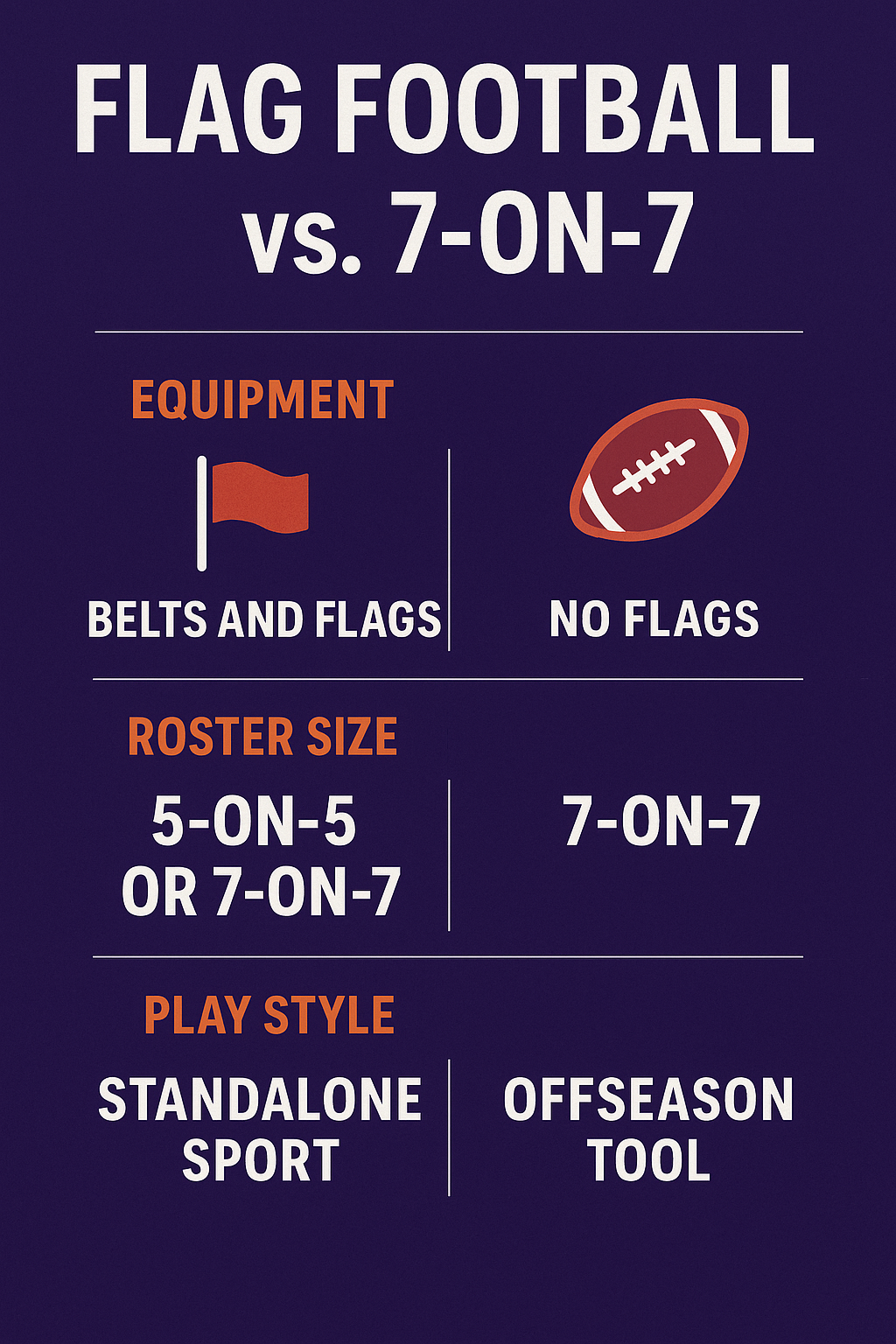
- Equipment:
- Flag football uses belts and flags to replace tackling.
- 7-on-7 still looks like traditional football - no flags, but no pads or tackling either. Plays end with a "touch."
- Roster Size:
- Flag typically features 5-on-5 or 7-on-7 formats, but with true flag rules.
- 7-on-7 is strictly seven players per side and usually mirrors tackle football positions.
- Play Style:
- Flag football is a standalone sport with its own schemes, specialized positions, and international growth.
- 7-on-7 is designed as an offseason development tool for tackle football, emphasizing passing reps for QBs, WRs, and DBs.
Purpose and Pathways
- Flag Football:
- Growing globally, with sanctioning at the high school level and Olympic inclusion in 2028.
- Offers scholarship opportunities, especially for women.
- Emphasizes agility, quick decision-making, and versatility.
- 7-on-7 Football:
- Popular with high school programs and private clubs as a training tool.
- Provides athletes a chance to showcase skills to recruiters in a passing-heavy environment.
- Keeps athletes sharp in the offseason but rarely stands alone as a sport.
Which Is Better for Athletes?
The answer depends on goals:
- If an athlete wants college football exposure, 7-on-7 can help showcase passing and coverage skills.
- If an athlete wants to play a standalone competitive sport with future opportunities, flag football is the path.
The Bottom Line
Flag football and 7-on-7 may look similar on the surface, but their long-term impact is very different. One is becoming a global sport with Olympic recognition, while the other remains a development tool for tackle football. Both, however, are shaping the future of how athletes train, compete, and showcase their talents.