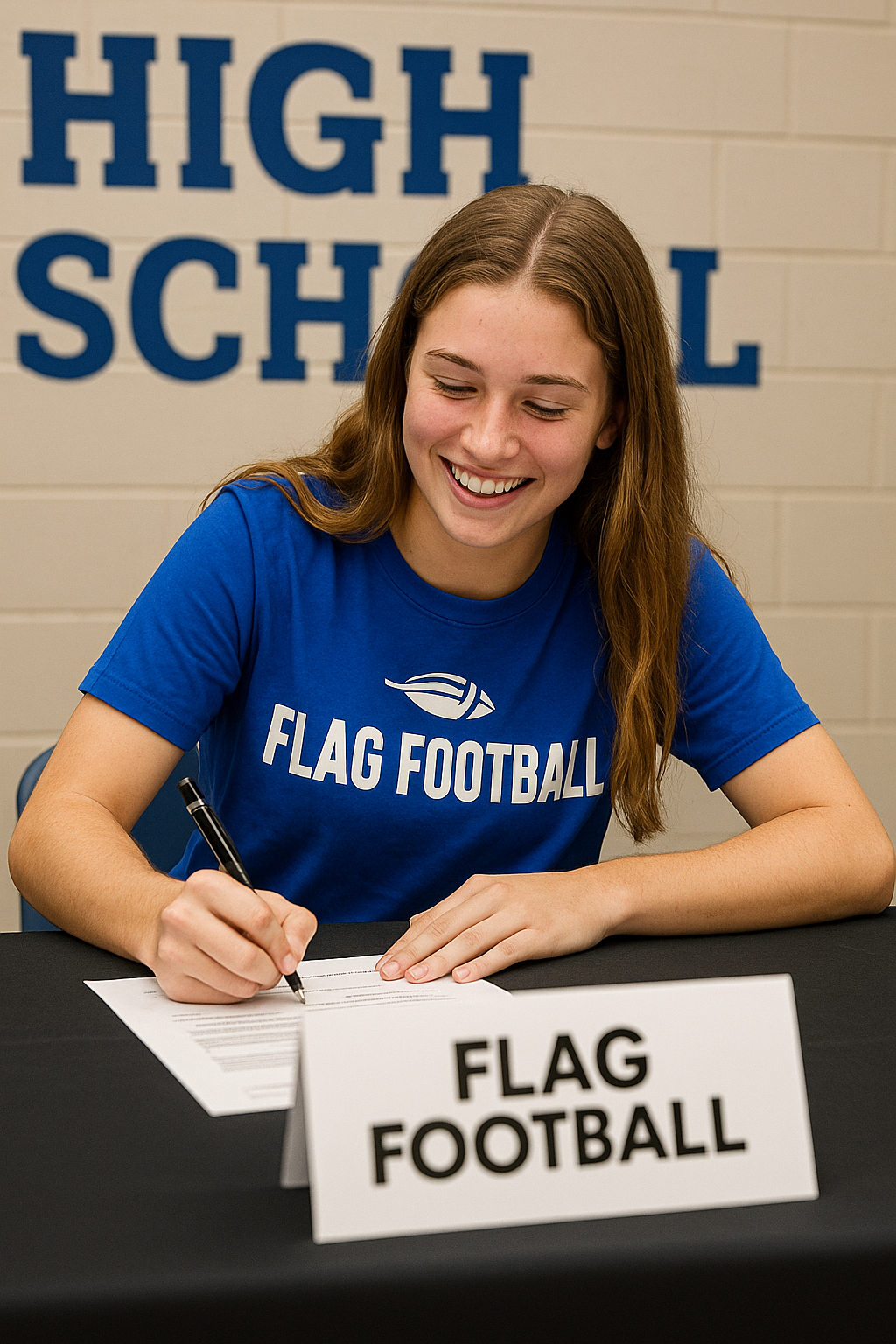
In recent years, flag football has transformed from a recreational youth sport into a genuine pathway to college opportunities for female athletes - and its momentum is only growing.
While once considered mostly a boys' game or a co-ed after-school activity, girls' flag football has exploded in popularity at the high school level, opening doors to scholarships, recruitment, and organized collegiate play.
A Rapidly Growing Sport
Girls' flag football is now a sanctioned varsity sport in several states, including Florida, Georgia, Nevada, and Alabama, with more states considering adding it. The National Federation of State High School Associations (NFHS) reports that participation among girls has more than doubled over the past five years.
At the same time, the National Association of Intercollegiate Athletics (NAIA) - in partnership with the NFL - has officially recognized women’s flag football as a varsity collegiate sport. More than 15 NAIA colleges now offer varsity flag football programs, with some providing athletic scholarships to recruit talented female players.
Scholarships and Recruitment
While NCAA Division I programs do not yet officially sponsor women's flag football, the growth at the NAIA level has created real opportunities for female athletes to compete beyond high school.
Many of these colleges actively recruit players from competitive high school programs and club circuits, looking for athletes with strong speed, agility, route-running, defensive instincts, and leadership skills.
Scholarships can range from partial to significant athletic aid, depending on the program and the athlete's profile.
The Olympic Factor
With flag football set to debut as an Olympic sport at the 2028 Los Angeles Games, interest and investment in the sport are expected to surge. Many see the Olympic inclusion as a game-changer, increasing visibility and pushing more colleges (possibly even NCAA programs) to add women's flag football teams in the coming years.
How Female Athletes Can Prepare
For girls aiming to use flag football as a path to college:
- Compete at the varsity or club level for strong game film.
- Attend exposure camps, combines, or showcases where college scouts may be present.
- Research NAIA schools offering flag football and reach out proactively.
- Maintain strong academic standing - many schools look for student-athletes who excel both on the field and in the classroom.
The Bottom Line
What was once just a recreational option is now a legitimate pathway to college opportunities, athletic scholarships, and even national and international competition. As the sport continues to grow, female flag football athletes have more opportunities than ever to turn their passion into a next-level experience.